



CAREER

GUIDANCE

MICT Sector Overview

Our work is essential for skills development and economic progress within South Africa’s key ICT sectors. We empower individuals in the advertising, film, media, telecommunications, IT, and electronics sub-sectors through skills development.

Our focus is on identifying in-demand skills, developing effective training, and providing quality education to meet the demands of the modern digital landscape.

The MICT Sub-sectors are made up of the following:

Advertising

Advertising

From creative concepts to strategic campaigns, this sector fuels the art and science of persuasion, connecting brands with consumers in a dynamic marketplace.

Film and Electronic Media

Film and Electronic Media

From big-screen blockbusters to cutting-edge digital content, and the magic of storytelling. This is where creativity, technology, and entertainment converge.

Electronics

Electronics

Driving innovation across industries, designing and manufacturing the electronic components and devices that underpin our modern world.

Information Technology

Information Technology

Harnessing the power of data and digital technologies to drive innovation, streamline processes, and solve complex challenges across all facets of society.

MICT SETA

Sub-sectors

Telecommunications

Telecommunications

From mobile networks to broadband infrastructure, this sector enables communication and information exchange on a global scale, fostering connectivity and collaboration.

Find the
Find the Right Career
Right Career
Tailored guidance for graduates, students, and budding entrepreneurs.
This guide will help you with the following:

Establish and define clear goals.

Explore career paths that help you grow professionally and personally.

Build strong foundations for a successful career.

Explore career opportunities within the MICT sector.

Gain a better understanding of the MICT sector.

Subject Choices

As you embark on selecting your subjects in Grade 9, it’s essential to consider both your passions and your future career aspirations.

Planning Career

As you embark on selecting your subjects in Grade 9, it’s essential to consider both your passions and your future career aspirations.

self assessment
1
Self
Assessment
Self Assessment
- Assess Yourself: Evaluate your interests, skills, values, and personal preferences.

• Identify Strengths & Passions: Reflect on your strengths, weaknesses, and what brings you career fulfilment.
• Align Your Goals: Use self-awareness to match your career choices with your long-term aspirations.
• Gather Feedback: Review your past achievements and identify areas for growth and improvement.
previous arrow
next arrow
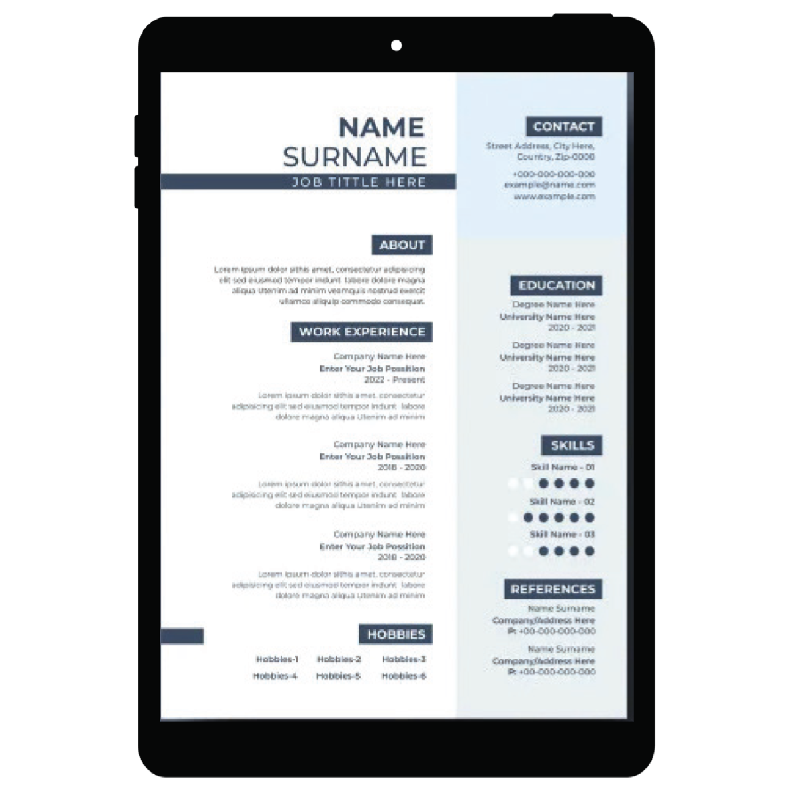
CV Preparation

Undeniably, the past few years have brought about many changes to the workforce, from a global pandemic and subsequent lockdowns to worker shortages. Companies and professionals alike have had to adapt the way they work.

As we enter a new year with high inflation rates and economic uncertainty, those seeking jobs will also need to create their CVs to compete in today’s marketplace. A CV should be concise, accurate, truthful, tailored to the position you are applying for and, importantly free of spelling and grammatical errors. to assist the reader. Creative professionals (such as graphic designers) may get more creative with their CVs where granted.

Subject Choices
01 Choose a resume format carefully

In 99% of cases, the chronological format is recommended.

Include a professional headshot of yourself and make sure to include your current job title, a professional email address, and relevant links (e.g. online portfolio, website, etc).

Always go for a CV summary (also known as a career summary). It gives hiring managers a quick snapshot of your career without reading the full CV.

Tailor your work experience to the job ad, making your achievements quantifiable. Use action verbs and power words. 

Keep this important section relevant by only including soft and hard skills that are required for the position.

Your most recent and highest education level are more than enough for a strong education section. we recommend making a detailed education section only if you’re a recent graduate with barely any work experience.

Optional sections like languages, hobbies, certifications and independent projects can be what sets you apart from other candidates with similar skills and experience.

01 Choose a resume format carefully

In 99% of cases, the chronological format is recommended.

Include a professional headshot of yourself and make sure to include your current job title, a professional email address, and relevant links (e.g. online portfolio, website, etc).

Always go for a CV summary (also known as a career summary). It gives hiring managers a quick snapshot of your career without reading the full CV.

Tailor your work experience to the job ad, making your achievements quantifiable. Use action verbs and power words. 

Keep this important section relevant by only including soft and hard skills that are required for the position.

Your most recent and highest education level are more than enough for a strong education section. we recommend making a detailed education section only if you’re a recent graduate with barely any work experience.

Optional sections like languages, hobbies, certifications and independent projects can be what sets you apart from other candidates with similar skills and experience.

Career Events
Event NameVenueDate Time
CONTACT US